Together,
we meet
our selves.
A method to develop self-awareness, recognize the parts that inhabit us, and regain a fuller sense of choice.

What is Voice Dialogue
Voice Dialogue was born in the early 1970s from an intuition of Hal and Sidra Stone, American psychologists and a couple in private life too. Hal came from a Jungian background, Sidra from a more academic and behavioral one. In the following decades they refined their practice together, creating the Psychology of Selves: the theory that different subpersonalities coexist within us, each with its own voice. An intuition that dialogues with other traditions of psychology, from Jung's archetypes to Roberto Assagioli's Psychosynthesis, up to Eric Berne's ego states and Virginia Satir's work on 'parts'.
These subpersonalities are sets of emotions, thoughts, and behaviors that we build as we grow, shaped by the environment in which we live. The result is the creation of our Primary Selves, the parts we identify with the most and show to the world.
Our inner multiplicity
Recognizing one's subpersonalities requires work that is far from immediate. We tend to identify with some of them until we confuse them with our entire identity, while others remain in the shadows. The first step is to distinguish them: realizing they exist and taking distance, instead of letting ourselves be governed by voices we don't recognize as such.

The parts we usually identify with and present to the world. They are so familiar to us that they simply seem like 'us'.
Every identification with a Primary Self leaves its opposite polarity in the shadow, which becomes a disowned self. Those who recognize themselves in 'doing', for example, thrive on pace and productivity, and struggle to allow themselves rest even when needed. Yet, the more 'doing' is strengthened, the more the opposite need grows beneath the surface: 'being', staying without producing. It is no coincidence that so many people arrive at meditation or mindfulness exactly at their peak of overload: it is the disowned part demanding space.
The polarities opposite to the Primary Selves, pushed aside as we grew. They don't disappear: they continue to act beneath the surface and ask for recognition.
Disowned selves never dissolve. They resurface in dreams, intuitions, and behaviors that catch us by surprise. The more alien a reaction seems to us, the more likely it is giving voice to a part we have excluded. In the most intense cases, it can even manifest in the body through a symptom.
The most eloquent sign of a disowned self at work is the intensity of judgment: how severely we condemn a behavior in others or in ourselves, how much we are drawn to certain people and repelled by others.
The model
Primary Self, Disowned Self, and the Aware Ego
There is the part of you that wants to move forward and the one holding you back. The one that takes care of everyone and the one that would like to think of itself. The one that judges, the one that dreams, the one that keeps everything under control.
They are not flaws to fix: they are your parts.
Some you know well, because they have always guided your life: they are your Primary Selves. Others you have put aside, often without realizing it: they are your Disowned Selves. For each of us, these parts are different.
And then there is a point, in the middle: the Aware Ego. The space from which you can observe all your parts without identifying with any, and choose from there.
Try moving that dot. Watch what happens.
← drag the point →
It is the point from where you can observe both parts, the Primary Self and the Disowned Self, without identifying with either.
It is not an extra part: it is a space. It doesn't judge, it doesn't take sides, it doesn't want to eliminate anything. It sees, and holds together.
This is where true choice is born: not the automatic one of the Primary Self, not the reactive one of its opposite, but the one that arises when you can draw from both.
The process of awareness
Voice Dialogue is a process that, in a protected and facilitated space, allows us to give voice both to primary subpersonalities (the ones we already know) and to the disowned ones. We learn to take distance from the selves we have identified with, to welcome and integrate the parts left on the margins.
It is not about understanding, but experiencing. Hal and Sidra Stone call this space the 'Aware Ego': a position from which to observe our subpersonalities with the gaze of a witness, recognize and integrate them without being dominated by them. It is not a stable state, but a constantly moving balance: to every Primary Self corresponds its disowned polarity, and the Aware Ego inhabits exactly the space between the two.
The position from which we observe our parts like a witness, welcoming them without being governed by them. It lies in the space between two opposite polarities.
Taking distance from our Primary Selves and recognizing the disowned ones produces a change that is hard to imagine until you live it. It is like stepping out of a prison built by ourselves, where one part kept all the others locked up.
One method, many fields
Born in the practice of two psychotherapists, Voice Dialogue is today a language shared by different professions. The map is the same for everyone: Primary Selves, Disowned Selves, Aware Ego. What changes is the path: each profession walks it with its own focus, its own contract and its own depth, between two poles: development and care. And it brings the method wherever people live and work: in organizations, in relationships, in education.
Voice Dialogue expands the sense of choice: it gives voice to the Primary Selves that guide us (and sometimes limit us) and opens access to the Disowned Selves, reservoirs of untapped energy. Oriented to the present and the future: awareness that becomes action.
In transitions and relational difficulties, giving voice to the parts in conflict helps people find their bearings: they discover they don't have to choose against a part of themselves, but with all of them.
When a part finds no voice, it may speak through the body. In medical coaching and in supporting patients, Voice Dialogue helps people dialogue with the parts involved in illness: the fear, the control, the part that wants to heal. Alongside medical care, never in its place.
This is the field where the method was born, with Hal and Sidra Stone. Here the work with the parts includes origins, wounds and the most vulnerable parts, within a clinical frame. It is territory reserved for psychotherapists.
Same map, different paths
Seen from the outside, a Voice Dialogue session in coaching and one in therapy can look identical: the same arrangement in space, the same giving voice to the parts, the same respect. The difference is not in the technique: it is in the focus, the contract and the depth.
In coaching
- Starts froma goal, a development theme
- Focusresources: energies to release
- Timepresent and future
- Parts at the centerPrimary Selves that limit, Disowned Selves that hold energy
- Outcomeawareness → choice → action
- Boundaryrecognizes clinical material and refers it
In therapy
- Starts froma suffering, a symptom
- Focuscare: wounds to work through
- Timeincludes the past and the origins
- Parts at the centervulnerable and wounded parts, the inner child
- Outcomeintegration and healing
- Boundarywelcomes clinical material and treats it
This is why we say that Voice Dialogue, in our practice, is resource creation: therefore, coaching.
What Voice Dialogue does not do, in coaching
A powerful method calls for clear boundaries. These are ours: they are not limits of the method, they are what makes the work safe and professional.
If a vulnerable or trauma-related part emerges, we don't facilitate it: we recognize it, we welcome it, and we bring the work back to the Aware Ego.
No regression, no reworking of the past. The person's story may surface in the session, but it is not the territory of the work.
No labels, no interpretation, no clinical reading. The parts speak for themselves: the facilitator doesn't tell the person who they are.
Pervasive anxiety, depression, addictions, eating disorders or dissociation call for a clinical frame, not a coaching session.
Primary Selves are protectors: they are honored first. Disowned Selves are accessed only when the system is ready, never by force.
Every session ends by returning to the Aware Ego: the person leaves the room whole, centered, never identified with a single voice.
Persistent suffering that invades daily life, traumatic material asking to be worked through, a request that is about care rather than development. In these cases coaching stops and accompanies the person toward the right professional.
Seeing the boundary and naming it is not a limit of the coach: it is their competence.
Do you want to discover it firsthand before diving deeper? The Voice Dialogue Introductory Course is a 3-hour guided experience to live the method, not just read about it.
Discover the Introductory Course →In practice
In coaching, Voice Dialogue generates an immediate leap in awareness, which translates into action. Those who experience it gain access to a broader view of their resources and a fuller sense of choice. Facilitating this process requires the fundamental skills of ICF coaching: trust, presence, active listening, direct communication, and cultivating awareness. There is no Voice Dialogue without listening capable of catching emotions, tone of voice, pauses, and silences. It is an experience: you truly understand it only by going through it.
Voice Dialogue is for anyone who wants to develop awareness of their Primary and Disowned Selves, in situations you will easily recognize: difficulty making decisions, uncertainty in conflicts, relationship difficulties. Both in private life and at work.
Here are some recurring themes among our clients.
- Conflicts between colleagues or collaborators
- Anger undermining work relationships
- Perfectionism in senior roles
- Leadership and limiting beliefs about one's abilities
- Important decisions to be made
- Job searching after 50
- Repeating couple dynamics
- Being stuck between two parts
- Anger or anxiety taking over
- The feeling of never being enough
- Moments of transition and new beginnings
- Family roles we always fall back into
Voice Dialogue Insights
Short video reflections to explore the method and its applications, one theme at a time.
Two experiences at the service of the method
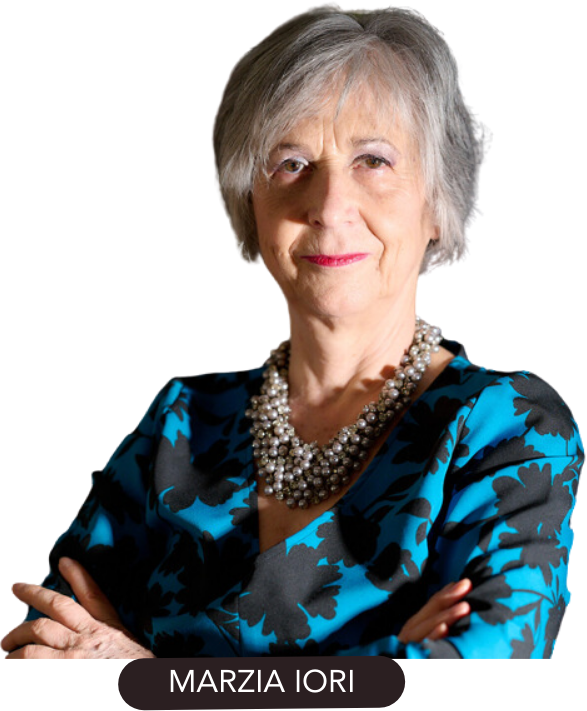
Marzia Iori
ICF MCC Coach, Mentor & Assessor, Supervisor, trainer, and facilitator in Leadership and Voice Dialogue programs. She brings over 30 years of background in the banking sector, including the role of L&D manager. Voice Dialogue has been part of her life since 2013, when she was directly trained by John Kent. She continues to invest in her professional development through supervision by world-renowned trainers such as Robert Stamboliev and Jaime Ona Pangaia.
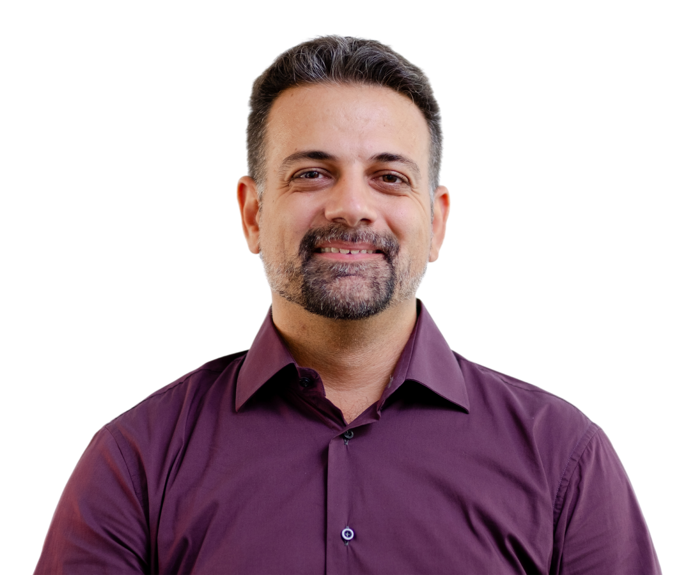
Danny Buccilli
ICF PCC Coach, EQ Assessor, and Voice Dialogue facilitator. He brings a decade of corporate experience in managerial roles within the marketing area of major fast-moving consumer goods multinationals. Voice Dialogue plays a central role in his personal and professional development: it allows him to work on his mission, promoting the discovery of our inner selves as inexhaustible engines of energy.
We are listed in the international IVDA directory of Voice Dialogue International, the home of the method founded by Hal and Sidra Stone.
Check the IVDA directory →Want to go beyond theory?
Three ways to take Voice Dialogue from reading to experience.
Voice Dialogue Introductory Course
3 hours online for a first taste of the method, before diving deeper.
Voice Dialogue Facilitation Course
A training program to integrate Voice Dialogue into your professional practice.
The Most Powerful Disowned Selves
An intensive day to meet the parts we have exiled most forcefully.
Let's talk.
A free introductory call to understand if and how I can help you.
Book an introductory call